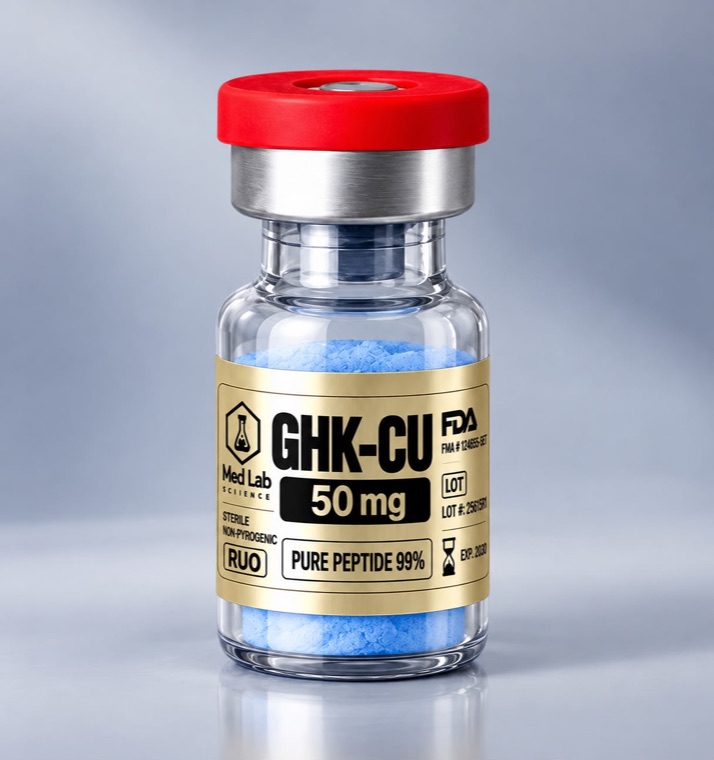
GHK-Cu is one of the most cited peptides in dermatological research. It combines a simple tripeptide with a copper ion, and that combination explains both the blue color of the powder and much of the scientific interest.
What GHK-Cu is
GHK is the three-amino-acid sequence glycine, histidine and lysine. It was identified in human plasma in the 1970s by researcher Loren Pickart, who observed that the molecule has a high affinity for copper (Cu²⁺). The resulting complex is GHK-Cu.
Plasma levels of GHK decline with age: they are much higher at 20 than at 60. That finding drove many of the studies on skin aging.
Why the powder is blue
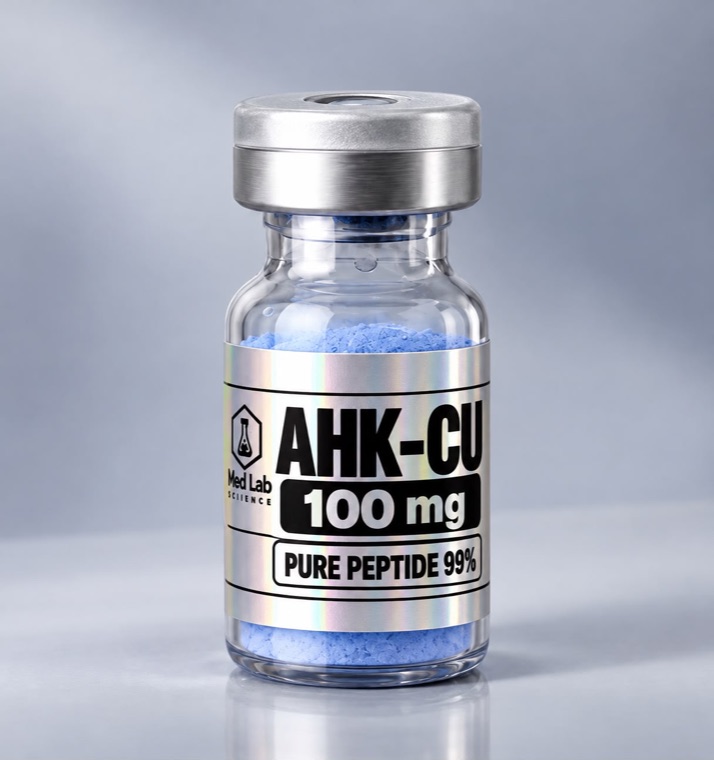
The copper bound to the peptide gives the lyophilized material a blue color. White GHK-Cu indicates missing copper or a different compound. It is one of the few cases where color helps confirm identity.
What research investigates
Studies on GHK-Cu, largely in vitro, in animals and in topical formulations, focus on:
- Collagen and elastin synthesis by fibroblasts.
- Extracellular matrix remodeling, acting on enzymes that break down and rebuild tissue.
- Wound healing in animal models.
- Hair follicles: studies on follicle size and the growth phase of the hair.
- Gene expression: analyses of genomic databases suggest GHK modulates the activity of hundreds of genes linked to repair and inflammation.
GHK-Cu vs. AHK-Cu
AHK-Cu is an analog in which glycine is replaced by alanine. Research on it is more limited and focused on the hair follicle, while GHK-Cu has a broader literature in skin and wound healing.
Blends with GHK-Cu
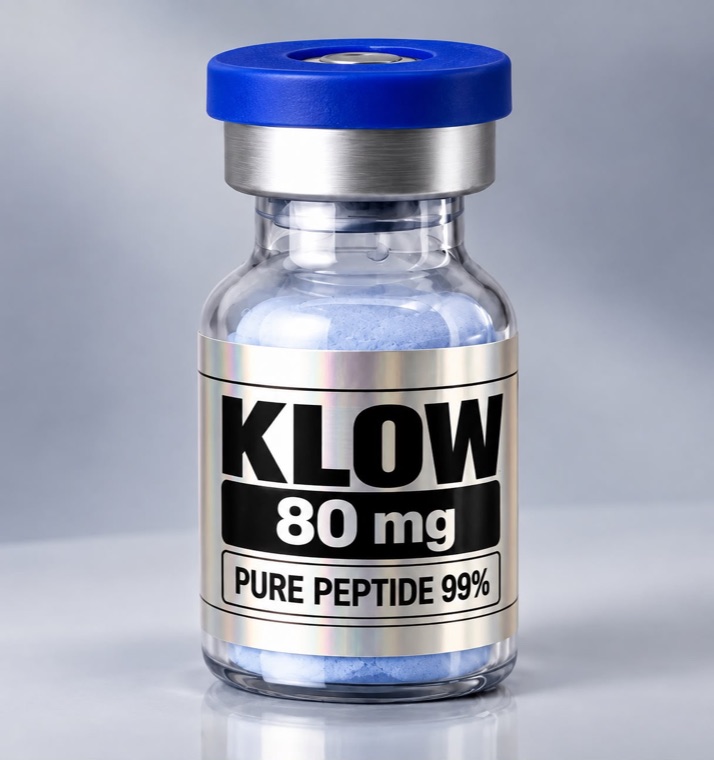
GHK-Cu also appears combined with other repair peptides. KLOW, for example, brings together GHK-Cu, TB-500, BPC-157 and KPV in a single vial, for research that studies more than one repair pathway at the same time.
Handling the material
Because it contains a metal, GHK-Cu is sensitive to pH and to agents that bind copper. For storage, follow our guide on how to store peptides. The raw material certificate of analysis is on the certificates page.