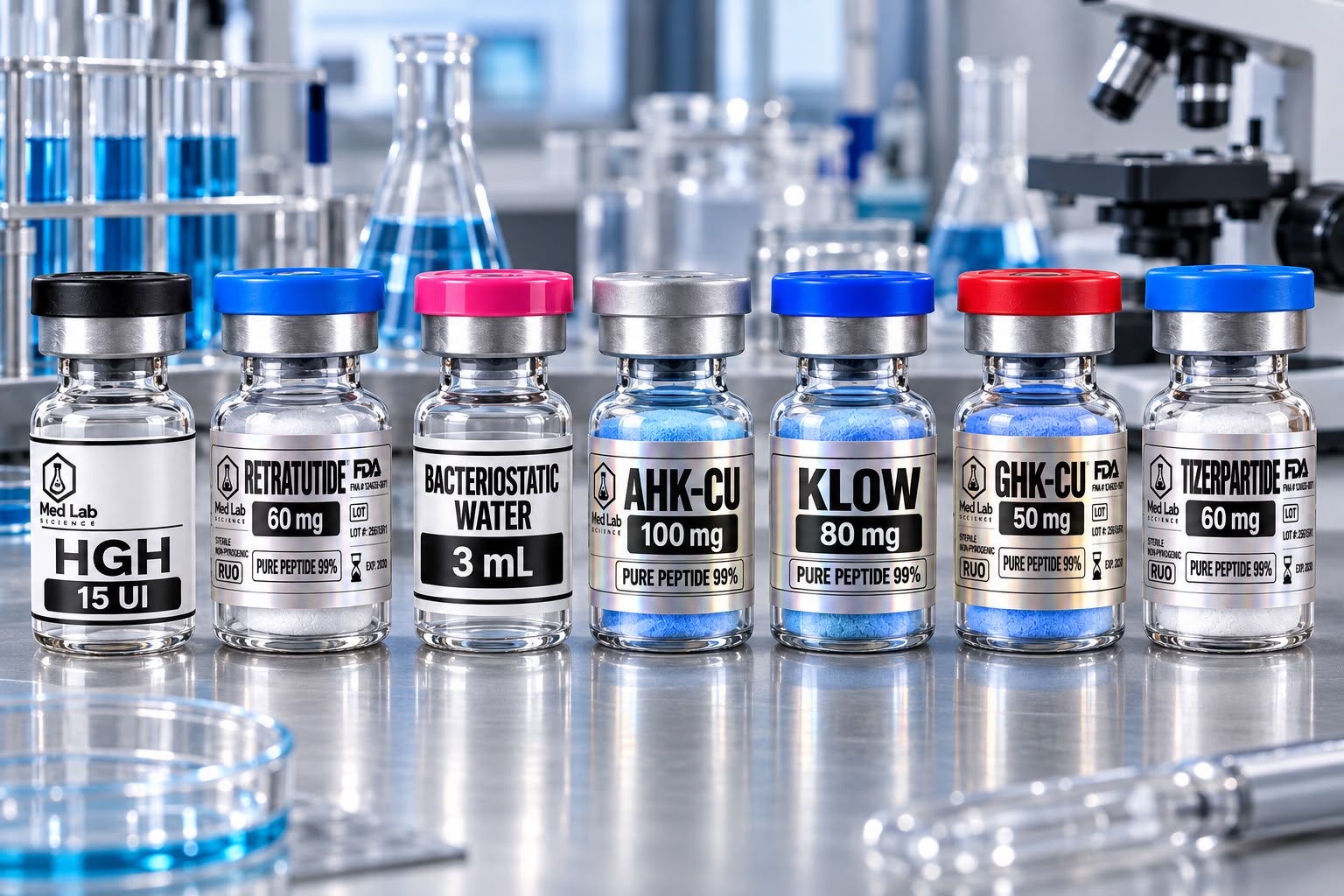
A high-purity peptide can lose part of its activity within days if it is stored poorly. Heat, light, moisture and freeze-thaw cycles are the main enemies. This guide summarizes good practice for both stages: the sealed vial and the reconstituted peptide.
Why peptides come lyophilized
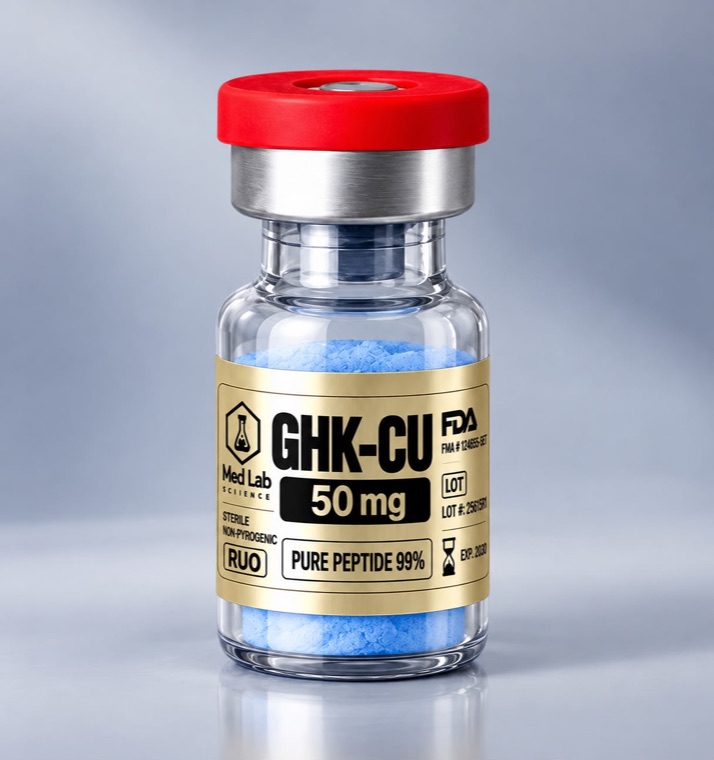
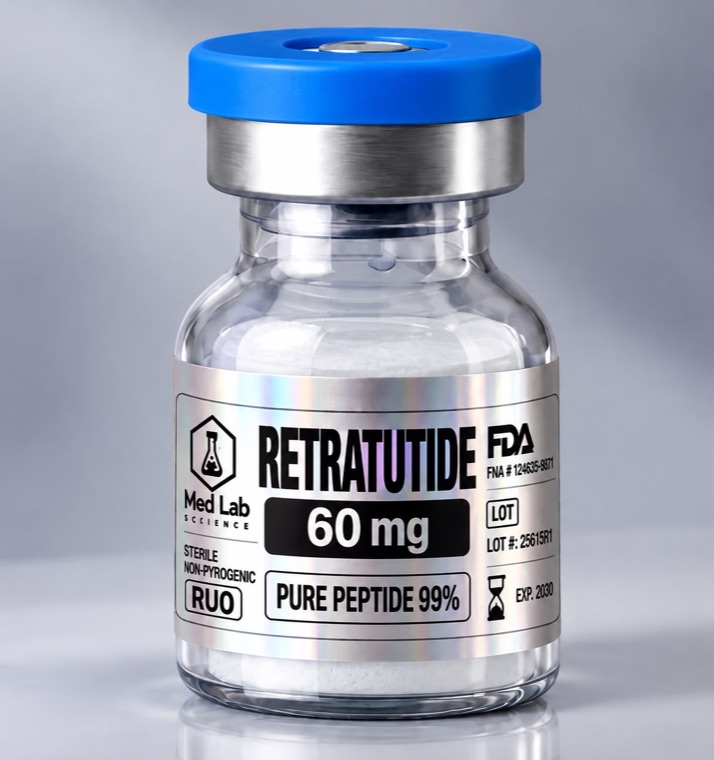
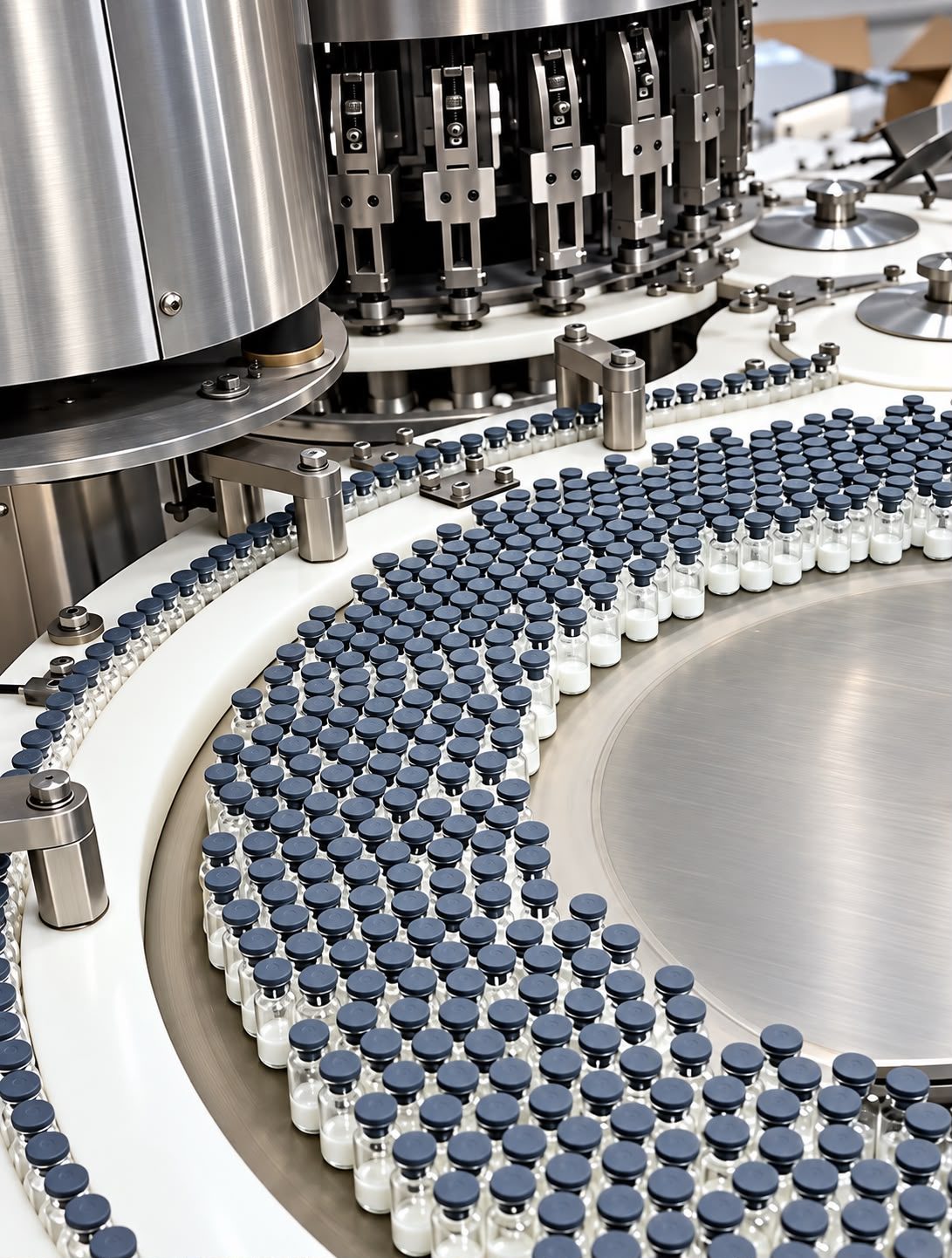
Lyophilization is freeze-drying: the solution is frozen and the water is removed under vacuum. The result is a dry, light powder or "cake". Without water, the reactions that degrade peptides, such as hydrolysis and oxidation, slow down dramatically. That is what makes it possible to ship and store the material for months.
Sealed vial
- Long term: freezer at −20 °C, protected from light. Under these conditions most peptides remain stable for up to 24 months.
- Short term: a refrigerator (2–8 °C) for a few weeks is acceptable.
- Room temperature: lyophilized powder tolerates a few days, enough for shipping, but should not be kept that way.
- Before opening: let the vial reach room temperature. Opening a cold vial makes moisture from the air condense inside it.
After reconstitution
In solution, the peptide becomes much more sensitive.
- Keep it refrigerated at 2–8 °C, never in the freezer.
- Use it within the time limit: with bacteriostatic water, the usual limit is about 30 days. With preservative-free sterile water, the window is much shorter.
- Do not refreeze. Each freeze-thaw cycle can break down the structure of the molecule.
- Avoid shaking: swirl the vial gently to dissolve. Foam and vigorous shaking can denature larger peptides.
Bacteriostatic or sterile water
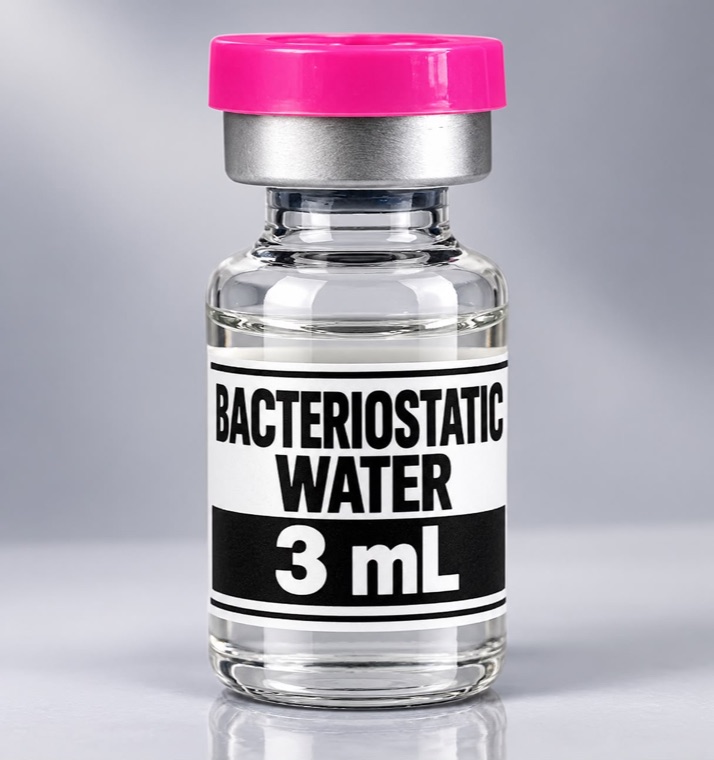
Bacteriostatic water contains 0.9% benzyl alcohol, a preservative that prevents bacterial growth when the vial is punctured several times. That is why it is the most common choice when the same vial will be used over several days.
Sterile water has no preservative and is meant for single use.
Light and moisture
Keep the vials in their original packaging or a closed box. Peptides containing amino acids such as tryptophan, methionine and cysteine are more prone to light-induced oxidation. In humid environments, a container with silica gel helps protect the vials.
Quick summary
| Situation | Temperature | Reference shelf life |
|---|---|---|
| Sealed, long term | −20 °C | up to 24 months |
| Sealed, short term | 2–8 °C | a few weeks |
| Reconstituted (bacteriostatic water) | 2–8 °C | up to ~30 days |
| Reconstituted (sterile water) | 2–8 °C | use immediately |
Each product page in the catalog lists the specific conditions for that peptide.