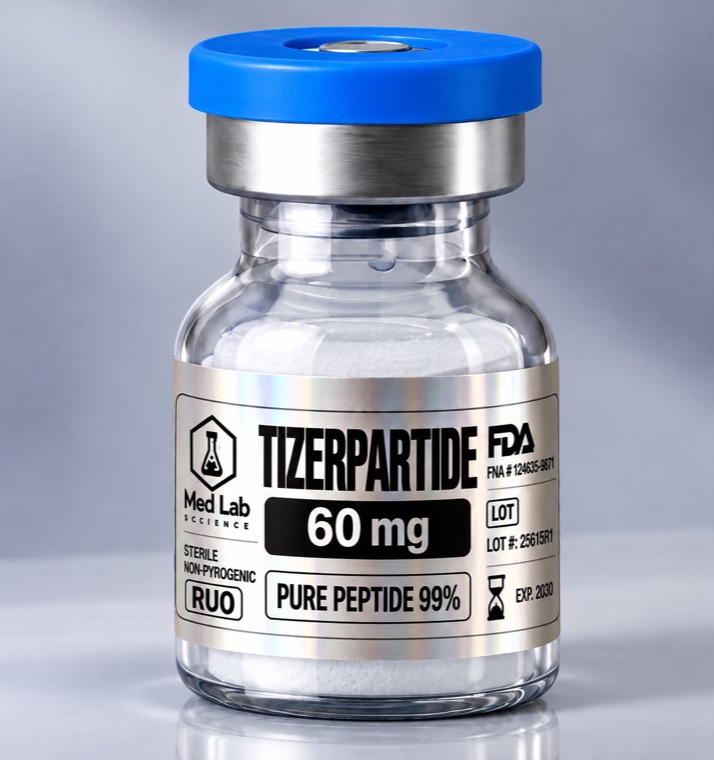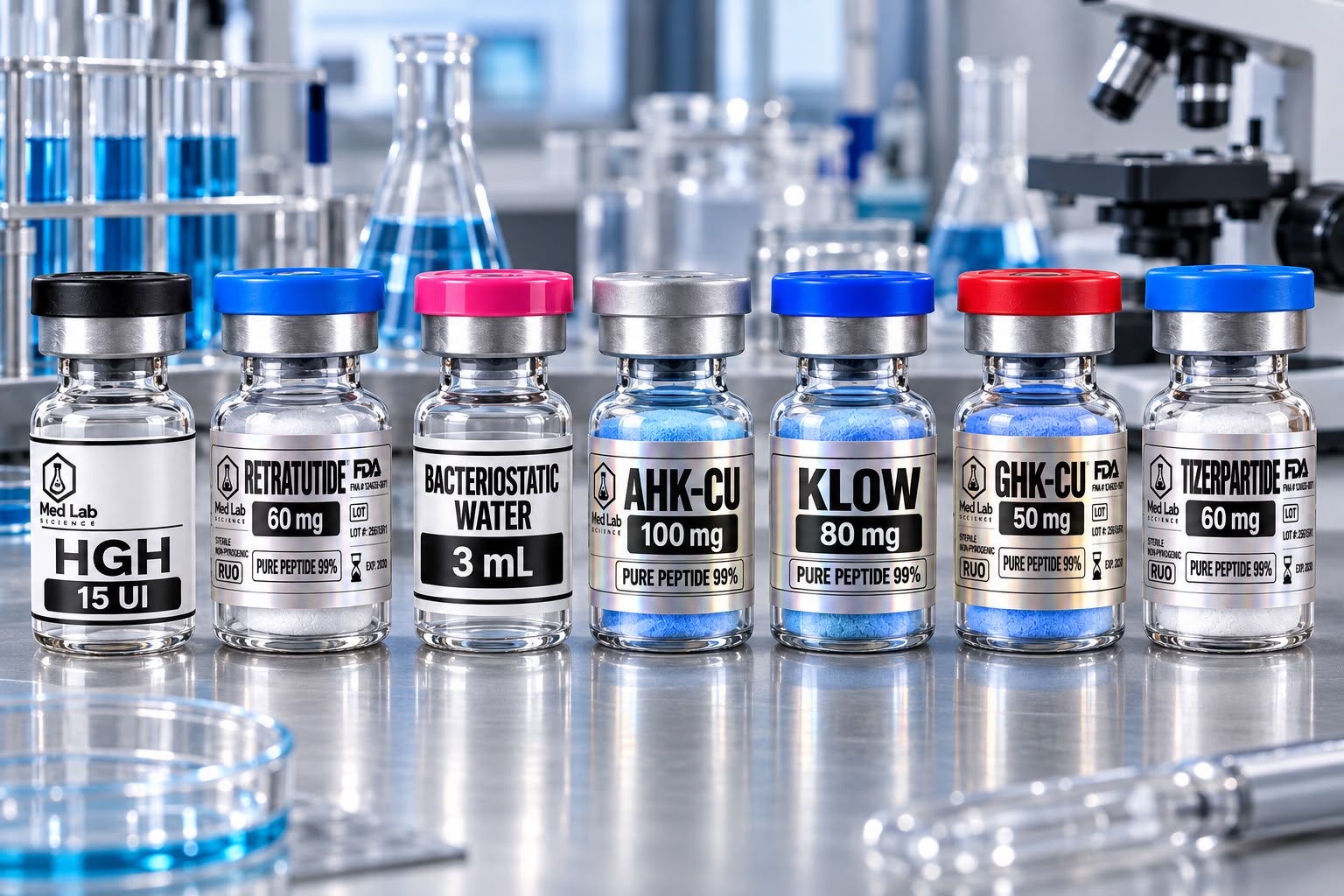
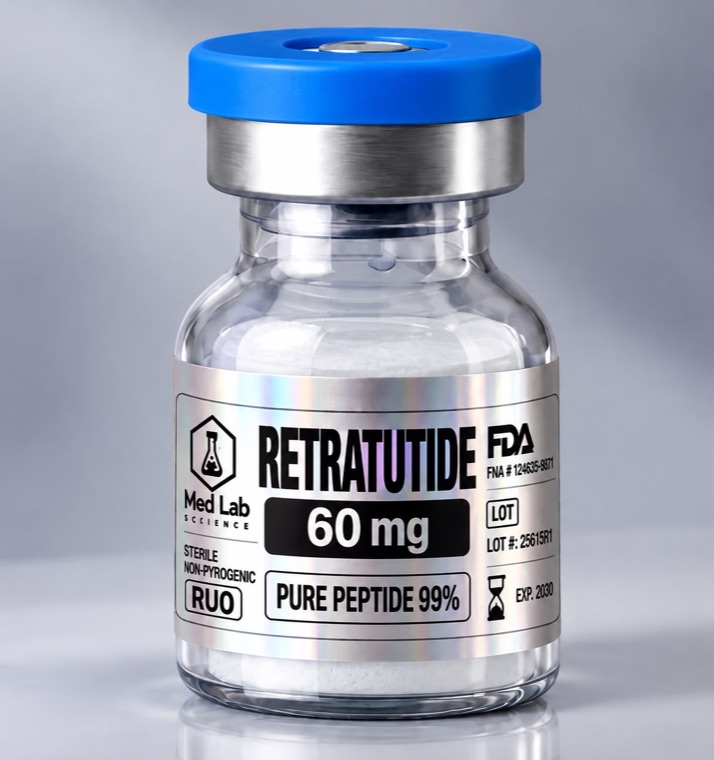
Tirzepatide and retatrutide are two of the most studied peptides in recent metabolic research. Both belong to the incretin family, gut hormones involved in glucose and appetite control, but they differ on one key point: how many receptors each molecule activates.
What incretins are
After a meal, the gut releases hormones such as GLP-1 (glucagon-like peptide-1) and GIP (glucose-dependent insulinotropic polypeptide). They stimulate glucose-dependent insulin release, slow gastric emptying and act on brain areas linked to satiety.
The first generation of drugs in this class activated only the GLP-1 receptor. The next step in research was to combine receptors in a single molecule, which paved the way for tirzepatide and later retatrutide.
Tirzepatide: dual GLP-1/GIP agonist
Tirzepatide is a synthetic 39-amino-acid peptide that activates both the GLP-1 and GIP receptors. It carries a fatty acid chain that binds to albumin in the blood, extending its half-life and allowing once-weekly administration in studies.
In the phase 3 SURMOUNT-1 trial, published in the New England Journal of Medicine in 2022, adults with obesity and without diabetes who received the highest dose tested lost on average about 20% of their body weight over 72 weeks. The molecule is already approved as a medicine in several countries.
Retatrutide: triple GLP-1/GIP/glucagon agonist
Retatrutide adds a third target: the glucagon receptor. Glucagon is usually remembered for raising blood glucose, but it also increases energy expenditure and fat oxidation in the liver. The idea behind a triple agonist is to add that effect to the appetite control of GLP-1 and GIP.
In the phase 2 trial published in the NEJM in 2023, participants with obesity in the highest-dose group had an average weight reduction of about 24% over 48 weeks. The molecule is still in phase 3 trials and is not yet approved as a medicine anywhere.
Side-by-side comparison
| Tirzepatide | Retatrutide | |
|---|---|---|
| Receptors | GLP-1 and GIP | GLP-1, GIP and glucagon |
| Class | Dual agonist | Triple agonist |
| Research stage | Approved medicine | Phase 3 |
| Reference trial | SURMOUNT-1 (2022) | Phase 2, NEJM (2023) |
| Role of glucagon | Not applicable | Energy expenditure and liver fat |
Why researchers compare them
Because tirzepatide already has extensive data, it has become the benchmark for new incretin-based molecules. Retatrutide studies try to determine whether the third receptor brings additional benefit and at what cost in tolerability. Gastrointestinal effects such as nausea appear with both and tend to be more frequent early on and at higher doses.
Another area of interest is liver fat: glucagon's action on hepatic metabolism makes retatrutide a candidate in research on fatty liver disease.
Quality of research material
For a comparative experiment to be reliable, the peptide must be exactly what the label says. That is why it is worth checking HPLC purity, identity by mass spectrometry and the batch on the certificate of analysis. Both molecules in the Med Lab line have a minimum purity of 99%.
Med Lab Research products are intended exclusively for laboratory research and are not approved for human use.