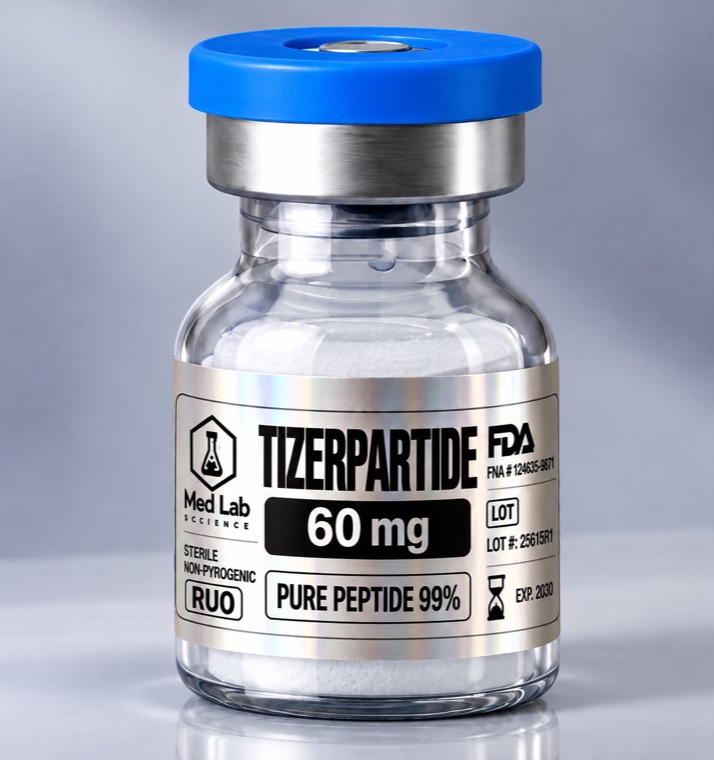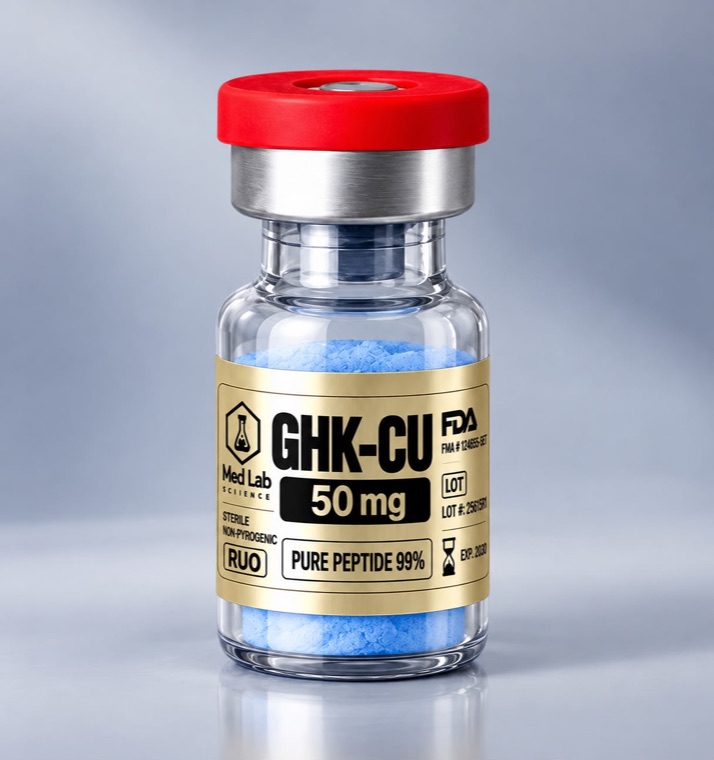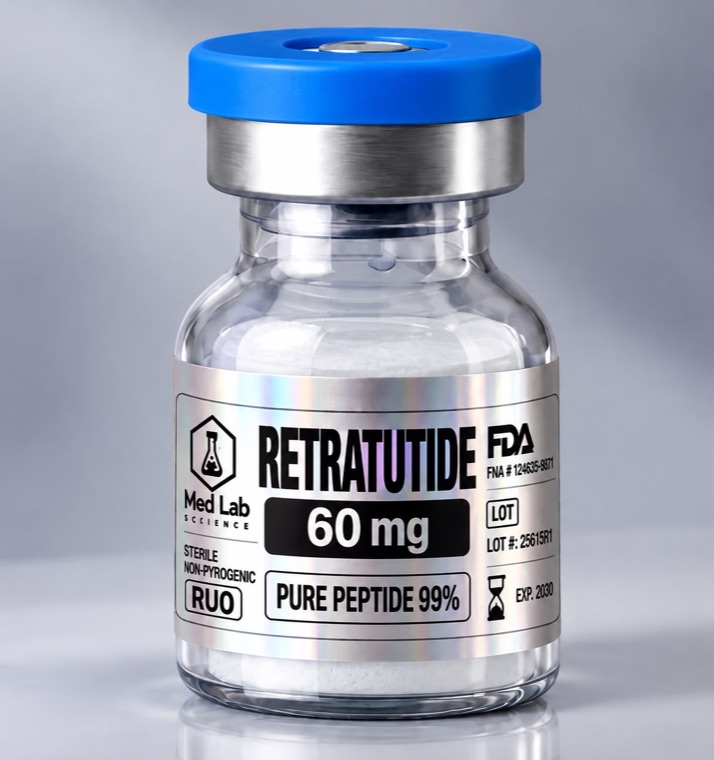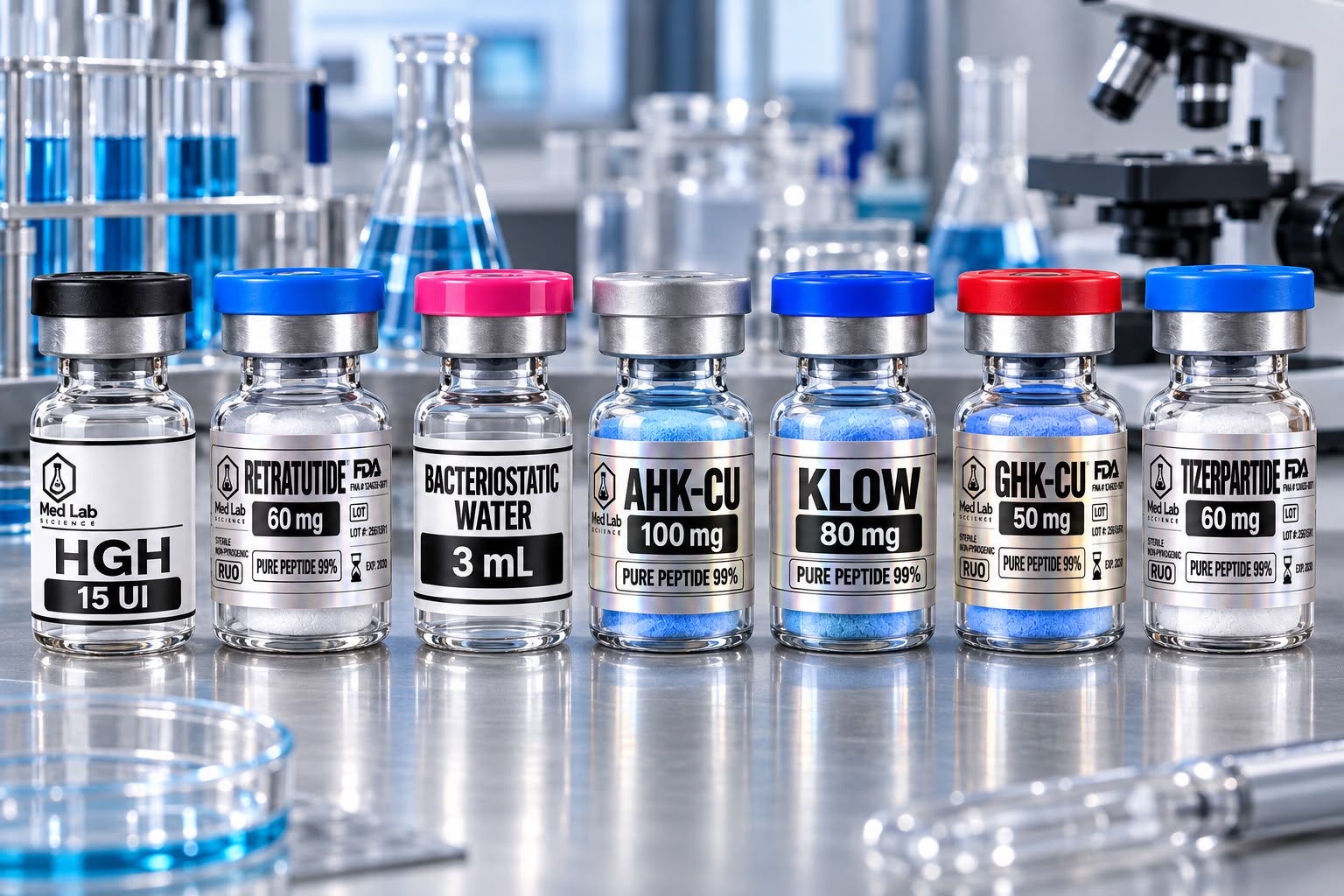
"99% HPLC purity" appears on almost every peptide label. The phrase is short, but it summarizes a specific laboratory analysis with limits worth knowing before you compare suppliers.
What HPLC is
HPLC stands for high-performance liquid chromatography. A small sample of the peptide is dissolved and pushed, under high pressure, through a column packed with particles. Each substance in the sample interacts with the column differently and leaves it at a different time, called the retention time.
At the outlet, a detector (usually ultraviolet) records each substance as a peak on a graph, the chromatogram.
How purity is calculated
Purity is the area of the main peak divided by the sum of the areas of all peaks. If the peptide peak accounts for 99.4% of the total area, the report states a purity of 99.4%.
The remainder usually consists of truncated or modified sequences formed during synthesis: a missing amino acid, a protecting group that was not removed, an oxidation. In research, these impurities can interfere with results, which is why the number matters.
What HPLC does not show
HPLC tells you how much of the material is a single substance, but on its own it does not prove which substance it is. A wrong but pure molecule would also produce a single peak. That is why the analysis is complemented by:
- Mass spectrometry (MS): measures the mass of the molecule and confirms it matches the expected sequence.
- Peptide content: besides the peptide, lyophilized powder contains residual water and salts (such as acetate). 99% purity does not mean that 99% of the vial's weight is peptide.
What to check in a report
- Compound name and batch, which must match the product.
- Method: HPLC for purity and MS for identity.
- Chromatogram with the main peak highlighted.
- Observed mass compared with the theoretical mass.
- Analysis date and the person responsible.
We explain each of these fields in how to read a certificate of analysis.
Purity in the Med Lab line
All Med Lab Research peptides are specified at a minimum purity of 99% by HPLC, with identity confirmed by MS. The raw material certificates are published on the certificates page, searchable by name and batch.