The certificate of analysis, or COA, is the document that shows what was measured in a peptide batch. Knowing how to read it is the most direct way to assess the quality of a research material.
Header: product and batch
The top section identifies the compound name, often with synonyms or the CAS number, and the batch number. The batch is what ties the document to a specific production run. A COA without a batch number proves nothing about the material you received.
It also shows the manufacturing date, the analysis date and sometimes the recommended retest or expiry date.
Formula and molecular mass
The certificate lists the molecular formula and the theoretical mass of the sequence. Further down, in the mass spectrometry result, you will find the observed mass. The two values must agree: a large difference points to a different molecule or a modification.
Test table
Most of a COA is a table with three columns: test, specification and result. The most common tests are:
| Test | What it checks | Expected result |
|---|---|---|
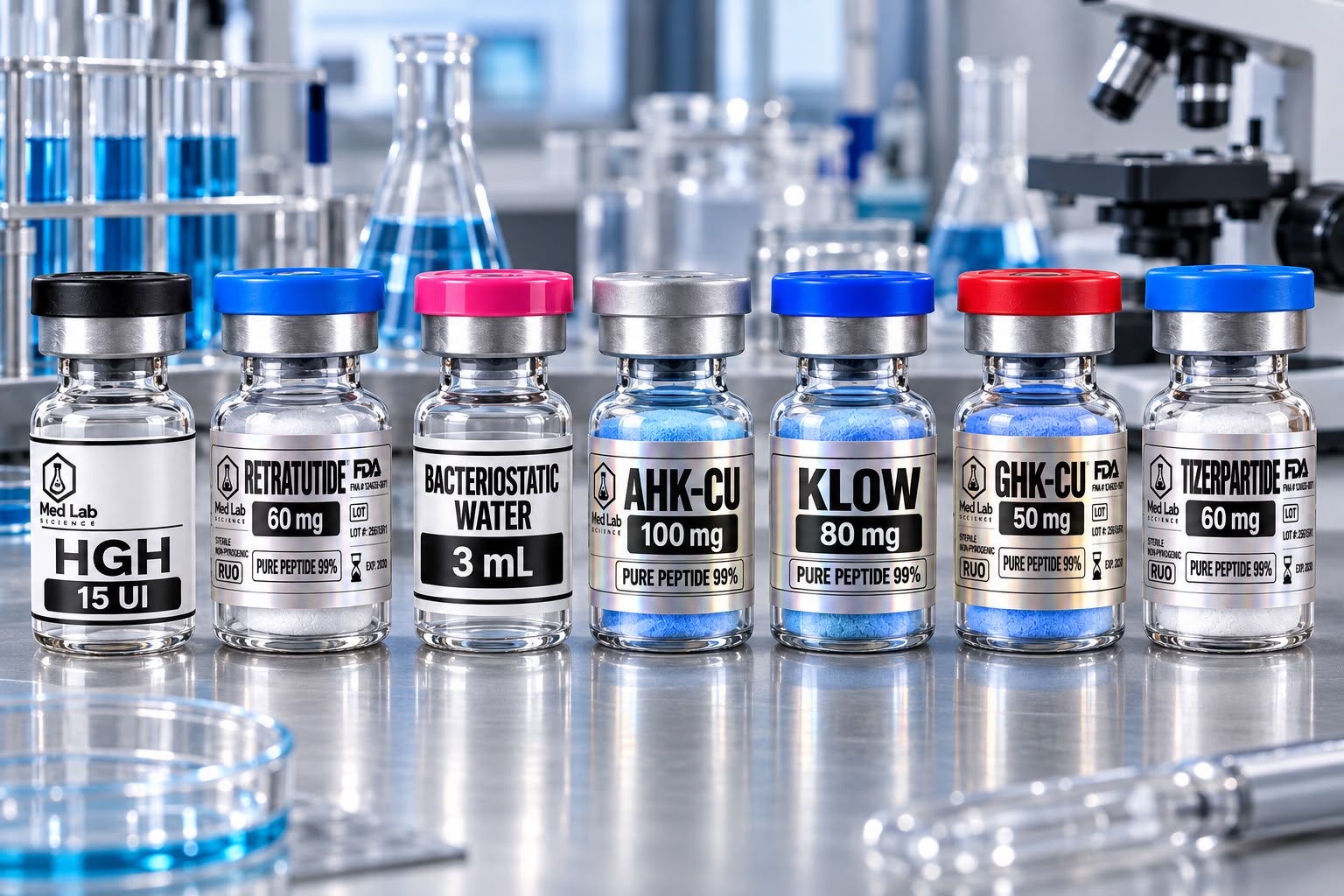
| Appearance | Color and form of the powder | White lyophilized powder (blue for GHK-Cu) |
| Purity (HPLC) | Share of the main peak | At or above specification, e.g. ≥ 99% |
| Identity (MS) | Mass of the molecule | Consistent with the theoretical mass |
| Single impurity | Largest secondary peak | Below the limit, e.g. ≤ 1% |
| Water (Karl Fischer) | Residual moisture | Below the specified limit |
Not every certificate includes every test, but purity and identity are the minimum.
Chromatogram
The HPLC graph shows time on the horizontal axis and intensity on the vertical axis. A good-quality material shows one tall, narrow peak and, at most, small peaks around it. Large secondary peaks or several peaks of similar size are a warning sign.
Signature and conclusion
At the end, the document gives the conclusion ("conforms" or "approved") and identifies the analyst responsible.
Raw material versus vial certificate
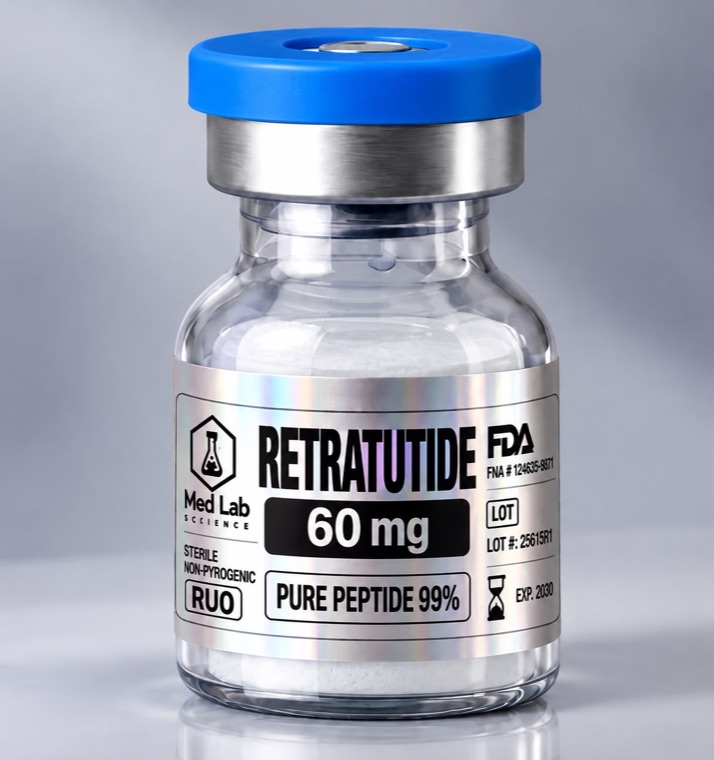
It is worth knowing which material the report covers. The certificates published by Med Lab refer to the raw material, the bulk powder, issued per bulk production batch. That is why the batch number on the certificate is not the same as the one printed on the vial label.
They are all on the certificates of analysis page. To understand the purity figure in detail, see what 99% HPLC purity means.